Dinamica Melyra Market Knowledge Hub
Dinamica Melyra presents a neutral overview of market concepts and connects visitors with independent educational providers. Content covers stocks, commodities, and currencies, designed for awareness and foundational understanding rather than actionable advice. Each section focuses on concepts and resources suited for learners seeking a solid educational base.
- Distinct modules detailing market concepts and learning steps.
- Defined boundaries for study scope and session behavior.
- Audit-friendly structure and transparent status concepts.
Get started with learning connections
Provide basic details to connect with independent educational providers and access learning content about market concepts.
Key features of the Dinamica Melyra knowledge hub
Dinamica Melyra outlines essential elements of market concepts education, focusing on organized content and clear governance for learning. The section highlights how modules can be structured to support understanding, observation, and parameter awareness in a purely educational context. Each card describes a foundational capability for educational review.
Learning pathway mapping
Shows how learning steps can be arranged from data signals to interpretation criteria and concept reviews. This framing supports steady understanding across topics and facilitates reproducible learning checks.
- Modular stages and handoffs
- Grouping by concepts
- Traceable learning steps
AI-supported guidance layer
Describes how artificial intelligence components can aid pattern understanding, parameter awareness, and learning prioritization with clearly defined limits.
- Pattern understanding routines
- Parameter-aware guidance
- Status-oriented monitoring
Governance and controls
Summarizes common interfaces used to shape learning content boundaries, scope, and session limits. This framing supports consistent guidance across educational modules.
- Exposure boundaries
- Content sizing rules
- Learning session windows
How the Dinamica Melyra educational workflow is typically organized
This overview presents a practical, learner-focused sequence aligned with common educational content setups. It explains how AI-assisted support can fit into topics like monitoring and parameter handling while content remains within predefined learning rules. The layout supports quick comparison across stages of the learning journey.
Data collection and normalization
Educational workflows often start with structured material preparation so later steps operate on consistent formats. This supports stable learning across topics and venues.
Rule interpretation and constraints
Learning guidelines and boundaries are evaluated together so content remains aligned with defined parameters. This stage often includes scope and boundary considerations.
Guided routing and tracking
When conditions are met, materials are forwarded and tracked through a learning lifecycle. Educational tracking concepts support review and follow-up actions.
Monitoring and refinement
AI-assisted support can aid monitoring routines and content review, helping maintain a clear and consistent learning posture. This step emphasizes governance and clarity.
Frequently asked questions about the Dinamica Melyra resource
These items summarize how this educational resource describes self-guided modules, learning guidance, and governance concepts. The answers focus on the scope of knowledge, organization, and typical steps used in an education-first approach. Each entry is crafted for fast reading and straightforward comparison.
What is the purpose of Dinamica Melyra?
The site offers structured information about market literacy concepts, learning components, and governance ideas used in independent education contexts. The content centers on awareness and understanding without practical application guidance.
How are learning boundaries described?
Learning boundaries are framed by scope, session length, and protective thresholds to support consistent educational exploration and review.
Where does AI-assisted support fit?
AI-supported guidance is described as aiding pattern recognition, parameter-aware workflows, and orderly monitoring within a learning context.
What happens after submitting the registration form?
Details are directed toward learning-provider partners to help connect learners with relevant educational content and pathways.
How is content organized for quick review?
Dinamica Melyra uses modular sections, numbered concept cards, and step grids to present topics clearly and enable efficient comparison of educational guidance.
From overview to learning connections with Dinamica Melyra
Use the information section to begin your path toward independent educational resources. The page outlines how market literacy topics such as stocks, commodities, and currencies are presented for awareness and foundational understanding in a purely educational context. The call-to-action guides learners toward the next steps in pursuing knowledge.
Guidance for safe learning workflows
This portion highlights practical concepts for managing boundaries and ensuring steady educational routines in an independent-education context. Each expandable item points to a distinct control area for clear review within the learning journey.
Set learning boundaries
Learning boundaries define the safe extent of study topics and pacing, helping learners review content consistently across sessions.
Standardize content scope
Content scope can be expressed through topic boundaries and pacing guidelines to support repeatable study patterns and review.
Use consistent study cadences
Regular learning intervals help maintain steady progress and align with predefined study schedules.
Maintain review checkpoints
Review milestones include content validation, parameter confirmation, and status summaries to foster clear governance of the learning journey.
Align learning controls before proceeding
Dinamica Melyra presents a structured framework for boundaries and review routines that fit into educational pathways. This supports consistent learning and clear guidance across topics.
Safety and privacy safeguards
Dinamica Melyra highlights core concepts related to safeguarding information and respectful access within an education-focused environment. The items emphasize secure handling, controlled access, and integrity-oriented practices. The goal is to present safeguards that align with independent educational resources and awareness-based content.
Data protection practices
Security concepts cover encryption in transit and careful handling of sensitive fields to support stable educational processing across content flows.
Access governance
Access governance can include structured verification steps and role-aware handling to ensure orderly navigation of educational content.
Operational integrity
Integrity practices emphasize thorough logging concepts and structured review checkpoints to support clear oversight during learning activities.
Disclaimer
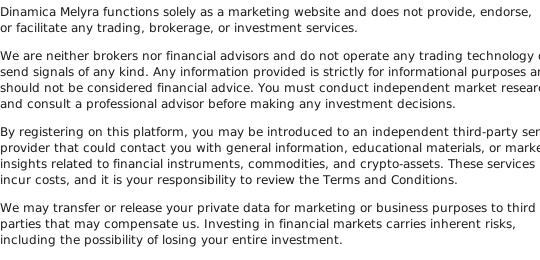
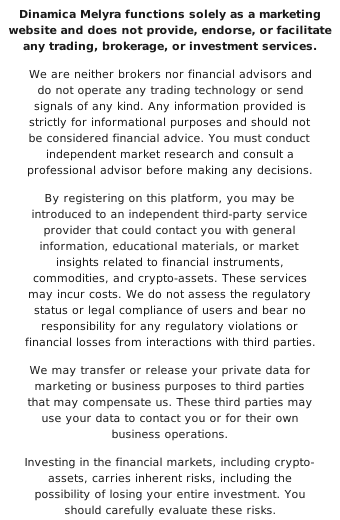
This website functions solely as a marketing platform and does not provide, endorse, or facilitate any trading, brokerage, or investment services.
Read More